6 Yield-Boosting Steps to Prepare Your Soil for Harvest
The difference between a mediocre harvest and crates overflowing with produce begins six months before you pick the first tomato. How to prepare a garden for a high yield vegetable garden demands deliberate soil amendment, microbial inoculation, and precise nutrient calibration. Most gardeners skip the foundational work and chase quick fixes during the growing season. High-yield cultivation starts with rebuilding soil structure, establishing mycorrhizal networks, and matching fertilizer ratios to the cation exchange capacity of your native earth.
Materials
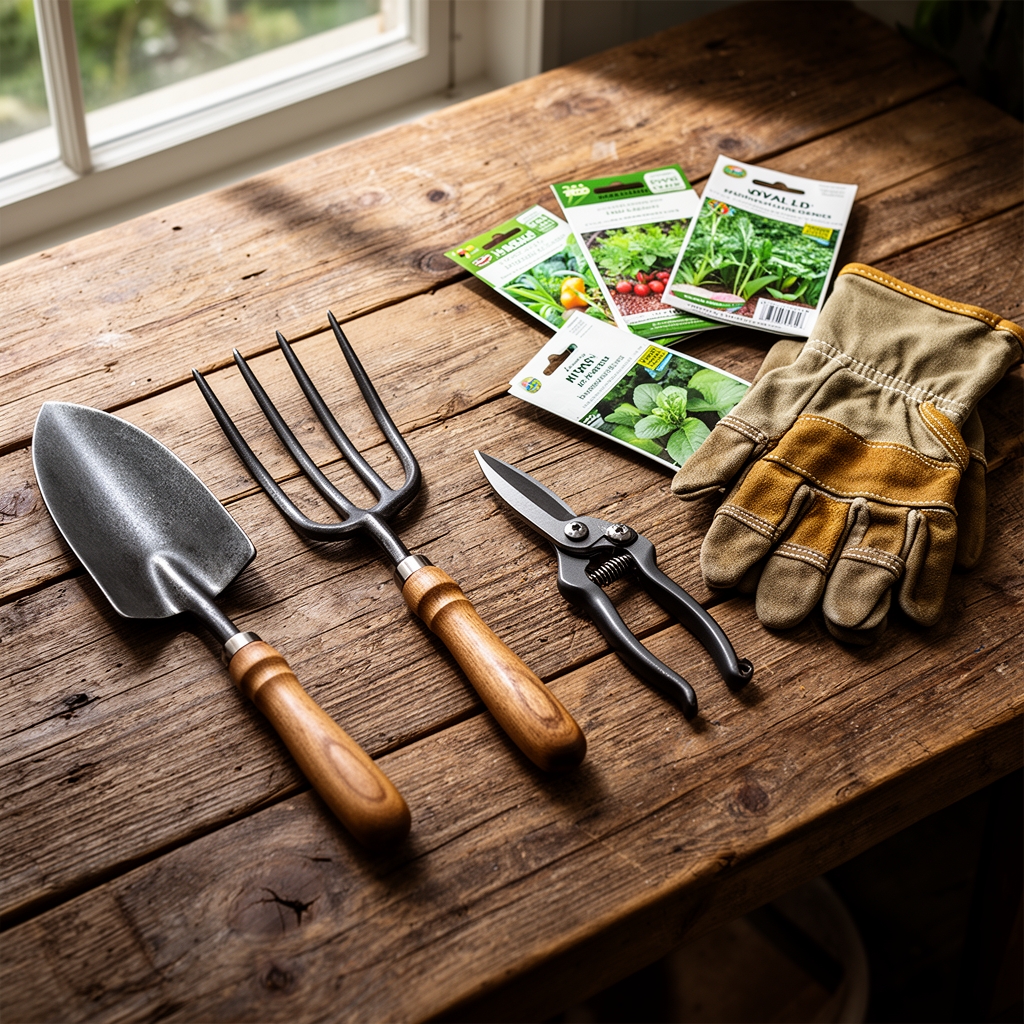
Soil preparation requires materials categorized by their pH influence and NPK ratios. Start with a baseline soil test to measure existing nutrient levels and cation exchange capacity. Agricultural extension labs provide these tests for $15 to $40.
For acidic soils (pH 5.5 to 6.2), apply dolomitic lime at 50 pounds per 1,000 square feet. This raises pH while adding calcium and magnesium. For alkaline soils (pH 7.2 and above), incorporate elemental sulfur at 10 pounds per 1,000 square feet to lower pH over four months.
Organic amendments include well-aged compost (NPK 1-1-1), alfalfa meal (NPK 3-1-2), kelp meal (NPK 1-0.2-2), and feather meal (NPK 12-0-0). Synthetic slow-release formulas like 10-10-10 or 14-14-14 provide consistent nutrition but do not improve soil structure. Balanced organic blends rated 4-4-4 supply steady macronutrients while feeding soil microbes.
Microbial inoculants matter. Purchase endomycorrhizal fungi formulated for vegetables, not ornamentals. These colonize root hairs and extend nutrient uptake by 700 percent beyond the rhizosphere. Apply at transplanting or seed sowing, not months in advance.
Additional materials include gypsum (calcium sulfate) for clay soils at 40 pounds per 1,000 square feet, greensand (potassium source) at 50 pounds per 1,000 square feet, and rock phosphate (0-3-0) at 10 pounds per 1,000 square feet for phosphorus-deficient soils.
Timing
How to prepare a garden for a high yield vegetable garden aligns with hardiness zones and frost dates. In zones 3 through 5, begin soil amendment in late August for spring planting. This allows organic matter to decompose over winter and nutrients to stabilize.
Zones 6 and 7 gardeners should amend soil in September or October. Cooler temperatures slow microbial activity but prevent nutrient leaching. In zones 8 through 10, amend soil from October through December. Mild winters allow continuous microbial breakdown.
Spring amendments require six weeks before transplanting. Apply compost and slow-release fertilizers in late March for a May 15 transplant date in zone 6. Soil temperature must reach 50°F before tilling. Cold, wet soil compacts under mechanical pressure and destroys structure.
For fall gardens, prepare soil in mid-July for an August transplant. High temperatures accelerate compost breakdown but increase nitrogen volatilization. Water immediately after application to bind nutrients.
Phases
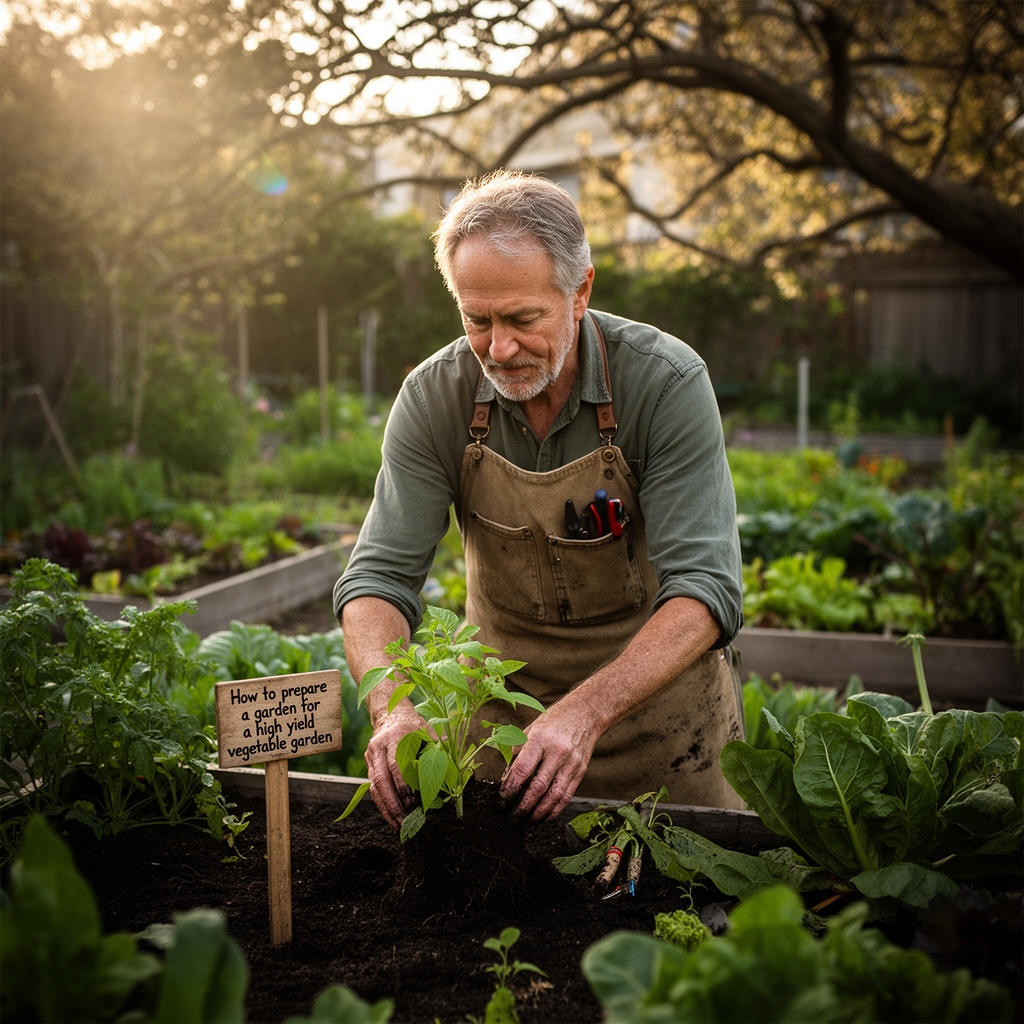
Sowing Phase
Broadcast compost at 2 cubic yards per 1,000 square feet. Spread evenly with a garden rake. Till to 8 inches depth using a rear-tine tiller. Shallow tilling (4 inches) leaves compacted subsoil that restricts root penetration.
Incorporate balanced fertilizer at label rates. For 4-4-4 organic blends, apply 10 pounds per 1,000 square feet. Rake smooth and allow soil to settle for one week. Settling prevents seed displacement and ensures seed-to-soil contact.
Pro-Tip: Add endomycorrhizal fungi directly into seed furrows at 1 teaspoon per 10 feet of row. Spores colonize emerging radicles within 72 hours.
Transplanting Phase
Dig planting holes twice the width of root balls. Mix excavated soil with 2 cups of worm castings and 1 tablespoon of bone meal (3-15-0) per hole. This localizes phosphorus near developing roots and stimulates auxin distribution.
Set transplants at the same depth they grew in containers. Tomatoes are the exception. Bury stems up to the first true leaves to encourage adventitious rooting. Water each transplant with 2 cups of diluted fish emulsion (5-1-1) mixed at 1 tablespoon per gallon.
Pro-Tip: Apply a 3-inch layer of straw mulch around transplants, keeping mulch 2 inches away from stems. Mulch moderates soil temperature by 10°F and reduces moisture loss by 40 percent.
Establishing Phase
Monitor soil moisture with a probe or your finger. Soil at 3 inches depth should feel like a wrung-out sponge. Inconsistent watering during establishment causes blossom end rot in tomatoes and cracking in root crops.
Side-dress plants three weeks after transplanting. Apply 1 cup of 4-4-4 blend per plant in a 6-inch-diameter ring, 4 inches from stems. Water immediately to dissolve granules and move nutrients into the root zone.
Pro-Tip: Foliar feed with liquid kelp (0-0-1 plus micronutrients) every two weeks. Spray leaf undersides at dawn when stomata open. This supplies trace elements that soil applications miss.
Troubleshooting
Symptom: Yellowing lower leaves with green veins.
Solution: Iron deficiency induced by high pH. Apply chelated iron at 1 tablespoon per gallon as a soil drench. Retest soil pH and incorporate sulfur if above 7.5.
Symptom: Stunted growth and purple-tinged leaves.
Solution: Phosphorus deficiency or cold soil. Warm soil with black plastic mulch for one week. Apply bone meal at 2 tablespoons per plant and water in.
Symptom: Wilting despite moist soil and collapsed stems near soil line.
Solution: Damping-off fungal disease. Remove affected plants. Drench soil with chamomile tea (antifungal) at 2 cups per square foot. Improve drainage and reduce watering frequency.
Symptom: Leaf edges browning and curling upward.
Solution: Potassium deficiency. Side-dress with greensand at 2 cups per 10 square feet or apply liquid kelp weekly until symptoms resolve.
Symptom: Holes in leaves with slime trails.
Solution: Slug damage. Set beer traps (shallow dishes filled halfway) every 10 feet. Handpick at dusk. Apply diatomaceous earth in a 3-inch band around plant bases.
Maintenance
Water deeply once per week, delivering 1 inch measured with a rain gauge. Deep watering encourages roots to grow 12 inches down rather than clustering near the surface. Drip irrigation applies water directly to root zones and reduces foliar disease by 60 percent compared to overhead sprinklers.
Side-dress every four weeks with 4-4-4 fertilizer at half the initial rate. Over-fertilization pushes vegetative growth at the expense of fruit set. Tomatoes and peppers require higher potassium during fruiting. Switch to a 2-3-4 ratio when first fruits appear.
Prune indeterminate tomatoes to one or two main stems. Remove suckers (shoots emerging from leaf axils) when they reach 2 inches. This focuses energy into fruit production rather than foliage.
Check soil pH mid-season. Heavy watering and fertilization alter pH over three months. Adjust with small lime or sulfur applications if pH drifts more than 0.5 units from target.
Rotate crops annually. Plant families such as Solanaceae (tomatoes, peppers, eggplants) and Brassicaceae (cabbage, broccoli, kale) deplete specific nutrients and harbor soil-borne pathogens. Move each family to a new bed on a three-year cycle.
FAQ
How far in advance should I prepare soil for a high-yield garden?
Six months for major amendments, six weeks minimum for spring planting. Fall preparation allows organic matter to decompose fully.
What NPK ratio works best for vegetables?
Balanced 4-4-4 or 5-5-5 during establishment. Switch to 2-3-4 or 1-2-2 when fruiting crops set blossoms.
Can I skip mycorrhizal inoculation?
Not for maximum yield. Mycorrhizae increase phosphorus uptake by 700 percent and improve drought tolerance by expanding the effective root zone.
How do I know if my soil needs lime or sulfur?
Test pH. Apply lime if below 6.0, sulfur if above 7.0. Most vegetables prefer 6.2 to 6.8.
Should I till in spring if I amended soil in fall?
Light cultivation to 3 inches only. Deep spring tilling destroys fungal networks established over winter. Use a broadfork to aerate without inversion.