6 Pro Tips to Use a Garden Trowel for Targeted Weeding
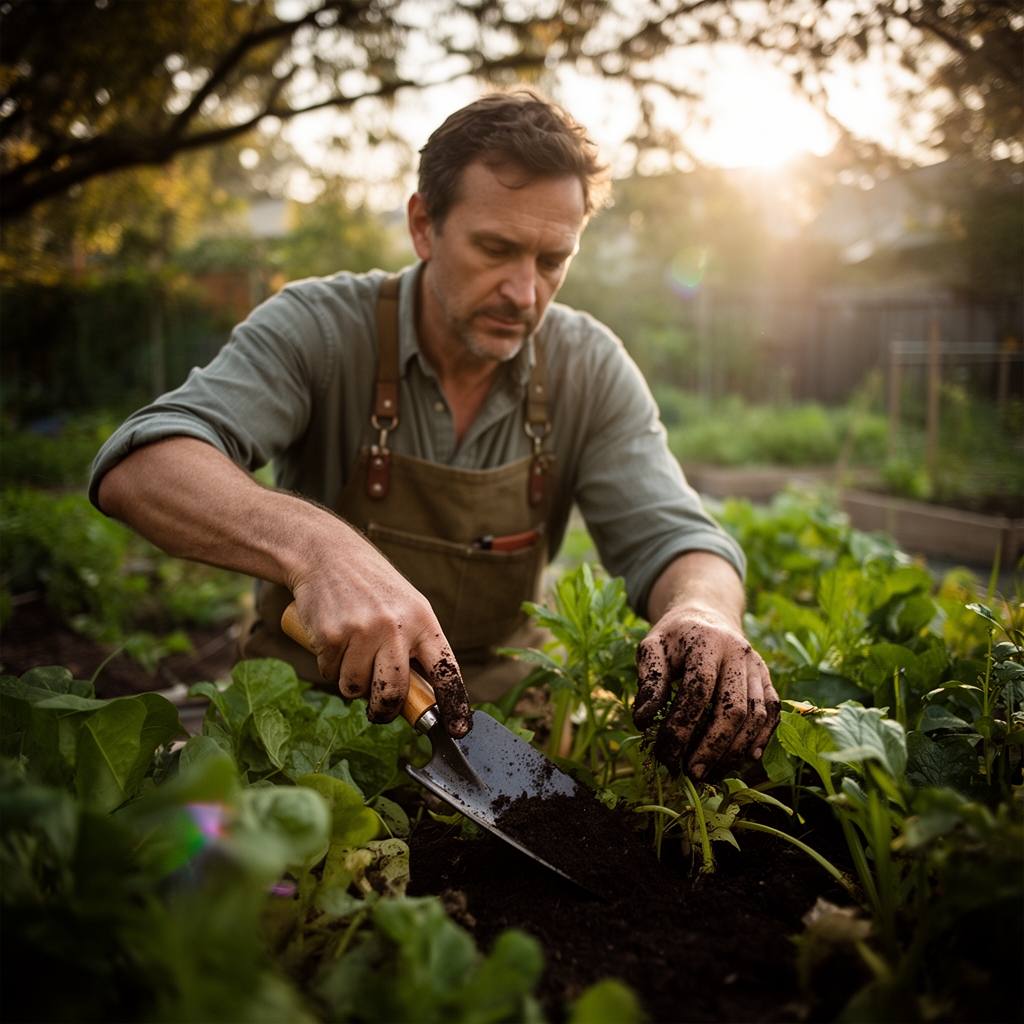
The first weed you miss with a hoe can spread roots beneath your tomatoes in a week. Hand-pulling risks tearing vegetable roots from shallow soil. Using a garden trowel for vegetable weeding solves both problems. The blade slides into the root zone at controlled angles. You extract dandelion taproots intact. You preserve the feeder roots of peppers and beans. The steel disrupts the rhizosphere of intruders without collapsing the soil structure around your crops.
Materials
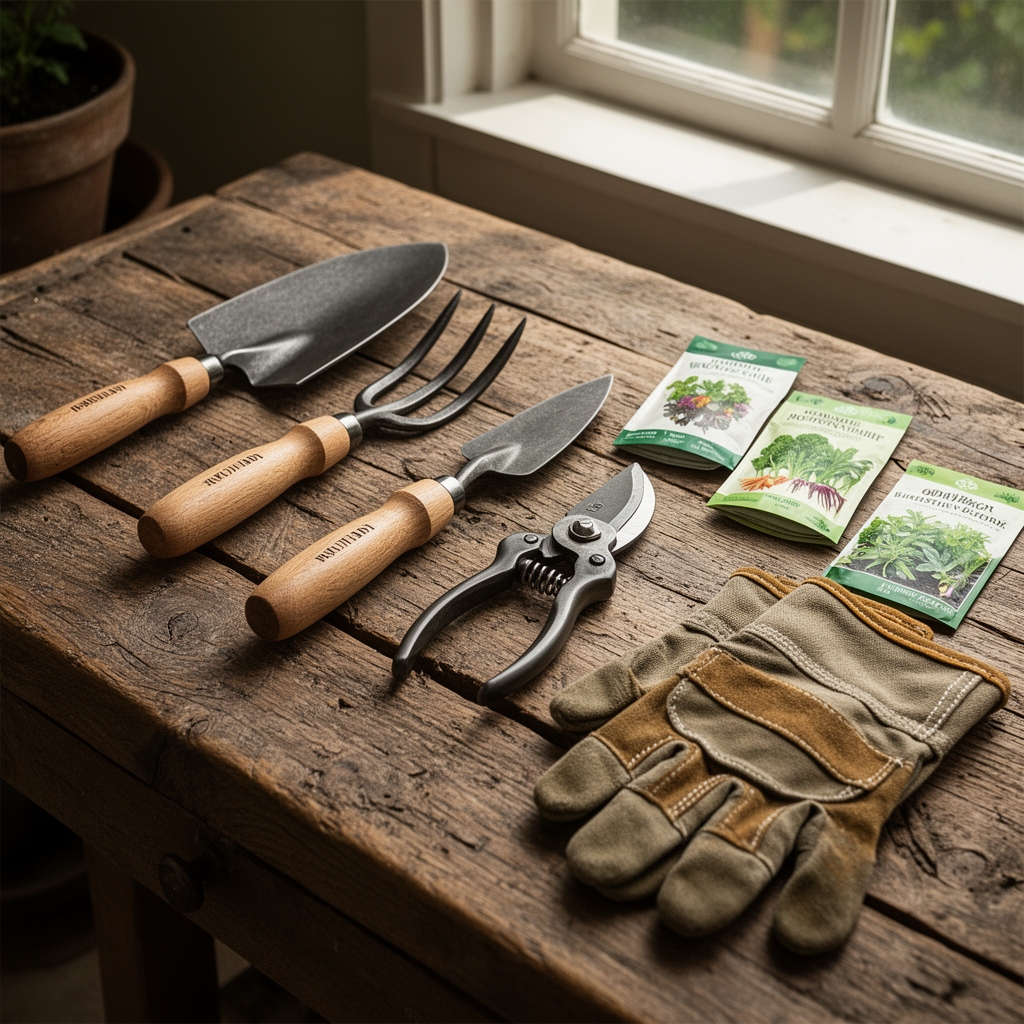
Select a stainless-steel trowel with a blade length of 5.5 to 7 inches. The blade width should measure 2 to 2.5 inches at the base. A narrow profile penetrates compacted soil without levering out clumps. Handle diameter between 1.1 and 1.3 inches reduces blistering during extended sessions.
Soil pH matters for both weed and vegetable health. Conduct a baseline test before weeding. Target pH 6.0 to 6.8 for most vegetable beds. Amend acidic soils below 5.8 with dolomitic limestone at 5 pounds per 100 square feet to raise pH by 0.5 units. Alkaline soils above 7.2 benefit from elemental sulfur at 1 pound per 100 square feet.
After removing weeds, top-dress rows with a 4-4-4 organic fertilizer. Fish meal, bone meal, and kelp meal deliver balanced NPK without soluble nitrogen spikes. Apply at 2 pounds per 100 square feet. The slow-release profile supports mycorrhizal colonization while discouraging flush weed germination from excess nitrogen.
Keep a folding pruning saw (6-inch blade) for woody perennial weeds. A soil knife with serrated edges cuts through fibrous grass roots. Carry a 5-gallon bucket to collect excavated material. Separate viable compost from seed heads that require hot composting above 140°F.
Timing
Weed when soil moisture sits at field capacity. The trowel penetrates without caking. Roots slide free without snapping. Morning sessions between 7 and 10 a.m. exploit overnight dew. Soil remains cool. You avoid midday heat stress on exposed vegetable roots.
In USDA Hardiness Zones 5 through 7, begin weeding 10 to 14 days after last frost. Soil temperature reaches 50°F at 2-inch depth. Annual weeds germinate ahead of warm-season crops like squash and cucumbers. Target lamb's quarters, pigweed, and purslane while seedlings display only cotyledons. Taproots remain short and extraction takes one motion.
Zones 8 through 10 face year-round weed pressure. Schedule targeted weeding every 7 to 10 days during the growing season. Winter cool-season crops such as kale and broccoli compete poorly with chickweed and henbit. Trowel-weed in late afternoon when transpiration slows. Disturbed soil loses less moisture.
Perennial weeds require extraction before flowering. Canada thistle forms buds in late spring. Bindweed blooms by early summer. Removal before seed set prevents exponential spread. Mark problem areas during bloom for excavation during dormancy in late fall.
Phases
Sowing Phase
Prepare beds 48 hours before sowing. Insert the trowel blade at a 60-degree angle, 3 inches from the row centerline. Pry backward to fracture compacted layers. Remove existing weed seedlings and root fragments. Rake smooth. Sow vegetable seeds at recommended depth. Firm soil with the trowel handle to ensure seed-to-soil contact.
Pro-Tip: Inoculate root zones with Rhizophagus irregularis (formerly Glomus intraradices) at sowing. Mix 1 teaspoon of mycorrhizal granules per planting hole. Fungal hyphae extend nutrient uptake by 10 to 100 times root surface area. Vegetables outcompete weeds for phosphorus and trace minerals.
Transplanting Phase
Dig planting holes 1 inch wider than root balls. Use the trowel tip to score vertical lines along hole walls. Rough surfaces encourage lateral root expansion. Transplant in the evening or under cloud cover. Water each hole with 16 ounces before setting the transplant. Backfill with excavated soil. Tamp gently to eliminate air pockets.
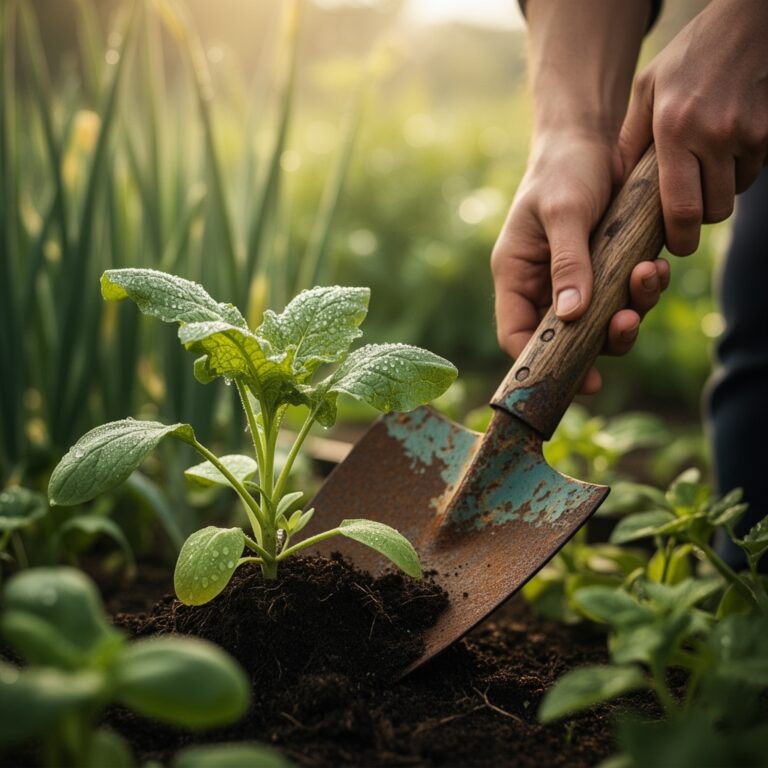
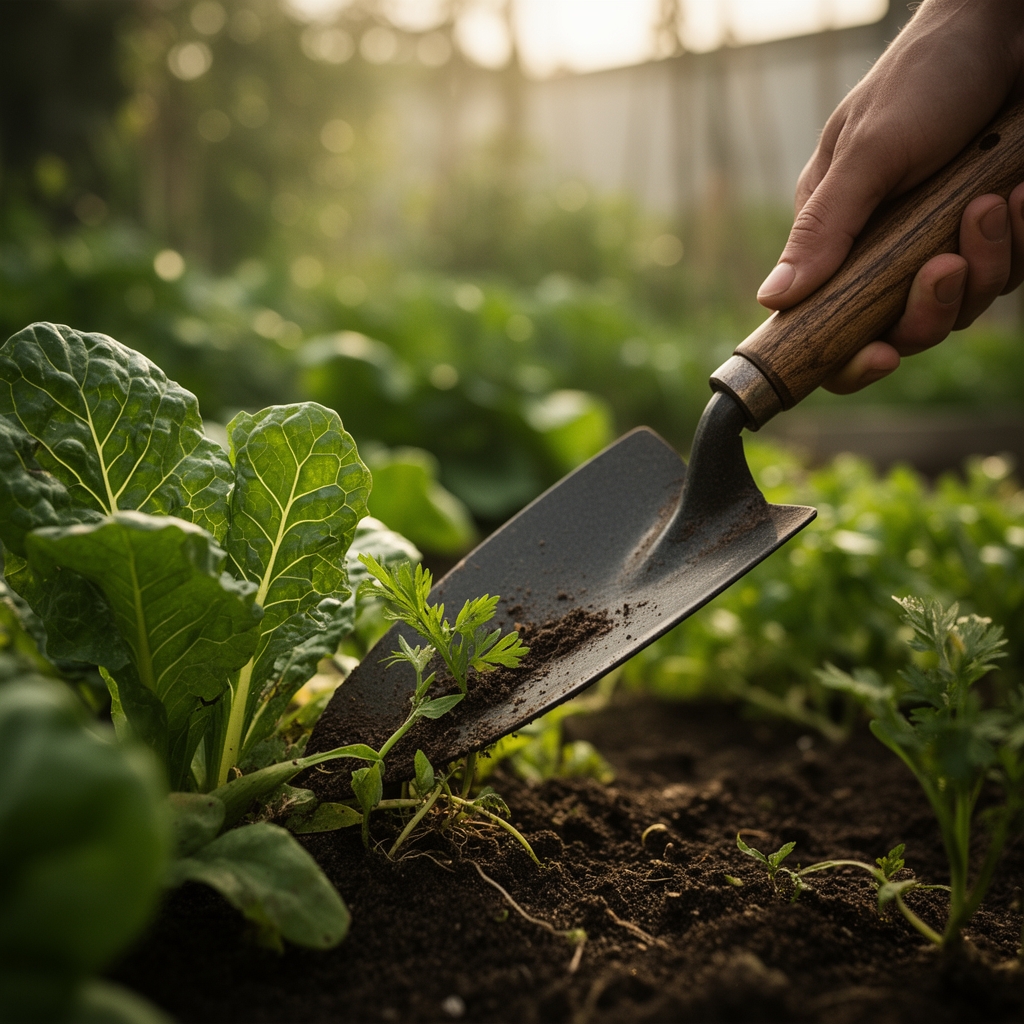
Identify emerging weeds within a 6-inch radius of each transplant. Insert the trowel at a 45-degree angle, blade edge facing the weed crown. Slide the blade to 4-inch depth. Lever the handle toward the row to lift the entire root system. Inspect for root fragments. Secondary shoots arise from snapped taproots of dandelion, dock, and plantain.
Pro-Tip: Prune transplant roots at a 30-degree angle with pruning shears before planting. Angular cuts stimulate auxin concentration at wound sites. New root initiation accelerates by 15 to 20 percent in trials with tomatoes and peppers.
Establishing Phase
Vegetables enter exponential growth 14 to 21 days post-transplant. Weeds compete for nitrogen and water. Target weeds when soil moisture drops to 60 percent of field capacity. Dry soil releases roots cleanly. Insert the trowel vertically alongside weed stems. Rock the blade back and forth to loosen soil structure. Grasp the weed at the crown. Pull steadily while extracting the trowel.
Mulch immediately after weeding. Apply 2 inches of straw or shredded leaves around vegetable stems. Organic mulch suppresses light, preventing photosynthesis in weed seeds near the surface. Cation exchange capacity increases as mulch decomposes, buffering nutrient availability.
Pro-Tip: For vining crops like cucumbers and melons, weed in a spiral pattern starting 8 inches from the main stem. Work outward to 24 inches. Avoid disturbing shallow feeder roots within the inner 8-inch circle. These roots account for 40 percent of water and nutrient uptake.
Troubleshooting
Symptom: Vegetable leaves wilt 24 hours after weeding.
Solution: Trowel work severed lateral roots. Water immediately with 32 ounces per plant. Apply diluted fish emulsion (1 tablespoon per gallon) to deliver soluble nitrogen. Recovery occurs in 48 to 72 hours if main taproot remains intact.
Symptom: New weed flushes appear within 5 days of weeding.
Solution: Dormant seeds moved to the surface during soil disturbance. Germination triggers when light penetrates 0.25 inches of soil. Apply corn gluten meal at 20 pounds per 1,000 square feet as a pre-emergent. The dipeptide bonds inhibit root formation in germinating seeds for 4 to 6 weeks.
Symptom: Dandelion crowns resprout from root fragments left in soil.
Solution: Excavate to 8-inch depth for established dandelions. The taproot extends beyond typical trowel reach. Use a soil knife or hori-hori to sever the root at 6 inches. Apply undiluted white vinegar (5 percent acetic acid) to the cut surface. Recheck in 10 days and re-treat any regrowth.
Symptom: Weed roots intertwine with vegetable roots, preventing clean extraction.
Solution: Water the area with 1 gallon per square foot 2 hours before weeding. Saturated soil loosens adhesion between root systems. Insert the trowel 4 inches away from the vegetable stem. Angle the blade outward at 70 degrees to create separation. Extract the weed in stages, removing outer roots first.
Symptom: Trowel blade bends when prying mature perennial weeds.
Solution: Carbon steel trowels flex under torque loads above 25 foot-pounds. Switch to forged stainless steel or tempered tool steel with Rockwell hardness C50 to C55. For roots exceeding 0.75-inch diameter, use a mattock or digging bar. Reserve the trowel for annuals and juvenile perennials.
Maintenance
Weed every 7 days during peak growing season. Frequency drops to every 14 days once vegetables canopy and shade the soil. Taller crops like tomatoes and pole beans reduce light availability at ground level. Weed seed germination declines by 60 percent under 70 percent shade.
Water vegetable rows with 1 inch per week during active growth. Split into two 0.5-inch applications to prevent runoff and maintain field capacity. Drip irrigation at 0.5 gallons per hour per emitter targets root zones. Weeds in unirrigated zones receive no supplemental moisture and desiccate.
Inspect the trowel blade after each session. Remove soil with a stiff brush. Rinse with water. Dry completely to prevent rust on carbon steel tools. Sharpen the blade edges with a 10-inch mill bastard file at a 20-degree angle. A sharp edge slices through roots with 30 percent less force.
Rotate trowel angle to avoid repetitive strain. Alternate between 45-degree, 60-degree, and vertical insertions. Switch hands every 15 minutes. Overuse of the dominant hand leads to medial epicondylitis (golfer's elbow). Ergonomic handles with cushioned grips distribute pressure across the palm.
FAQ
How deep should I insert the trowel for annual weeds?
Insert to 3-inch depth for annuals like chickweed and crabgrass. Roots concentrate in the top 4 inches of soil. Deeper insertion wastes energy and increases soil disturbance.
Can I weed immediately after rain?
Wait 4 to 6 hours after rain stops. Saturated soil compacts under foot traffic and trowel pressure. Soil structure collapses. Aim for moist, not muddy, conditions.
Should I remove weed roots that snap during extraction?
Yes. Snap a photo of the break point with your phone for reference. Excavate 1 inch beyond the break. Perennial roots regenerate from fragments as small as 0.5 inch.
How do I prevent weeds from reseeding in my compost pile?
Compost weeds with seed heads in a hot pile that reaches 140 to 160°F for 14 consecutive days. Turn every 3 days. Seeds lose viability above 140°F. Cold piles allow seeds to survive.
What is the best trowel blade width for tight vegetable spacing?
Use a blade no wider than 2 inches for rows spaced 6 inches apart. Narrow blades maneuver between carrot, radish, and lettuce plants without damaging stems or foliage.