9 Heat-Management Steps to Prepare Your Garden for Summer
The late-spring sun shifts to a high arc, soil temperature crosses 60°F at four inches deep, and root systems accelerate their respiration. How to prepare a garden for a summer vegetable garden begins eight weeks before the last frost date, when soil structure, nutrient profiles, and microbial populations require calibration. A garden prepared correctly will sustain continuous fruiting through 95°F afternoons without physiological collapse.
Materials
Assemble supplies by chemical function. For pH adjustment, agricultural lime (calcium carbonate) raises soil to the 6.2–6.8 range required by tomatoes and peppers. Elemental sulfur lowers pH for heat-tolerant okra in alkaline regions.
Nutrient amendments should match crop demand. Incorporate composted poultry manure at 4-4-4 NPK ratio, applied at 2 pounds per 100 square feet for heavy feeders like squash. Bone meal (3-15-0) supports root expansion in transplants. Kelp meal (1-0.5-2.5) supplies trace minerals and cytokinins that buffer heat stress.
Soil structure requires coarse compost at two cubic feet per 100 square feet to increase cation exchange capacity. Perlite or coarse sand opens clay profiles. Humic acid granules at 1 pound per 100 square feet chelate micronutrients and improve water retention by 18 percent.
For biological inoculation, purchase endo-mycorrhizal fungi (Glomus species) and apply at transplant. Bacillus subtilis powder colonizes root zones and outcompetes damping-off pathogens.
Irrigation infrastructure must deliver 1.5 inches per week. Drip tape with 12-inch emitter spacing reduces foliar disease. Mulch materials include aged hardwood chips at three inches depth or straw at four inches to moderate soil temperature swings.
Timing
Zone 5 gardeners begin soil work April 1, targeting a May 15 frost-free date. Zone 7 advances to March 10 for an April 20 transition. Zone 9 schedules February work to establish crops before June heat.
Soil can be worked when a handful compressed into a ball crumbles at 50 percent moisture. Temperature matters more than calendar date. Use a soil thermometer at 8 a.m. to confirm 55°F minimum for brassicas, 65°F for cucurbits, and 70°F for okra and melons.
Pre-summer planting windows span three weeks. Cool-season crops like lettuce tolerate late April starts. Warm-season transplants enter beds May 10–30 in Zone 6. Direct-sown beans and squash follow soil warming to 68°F.
Phases

Sowing
Turn beds to ten inches depth with a broadfork. Break clods to pea-sized aggregates. Broadcast compost and rake to grade. Test soil pH with a slurry method. Adjust three weeks before planting to allow equilibration.
Furrow depth governs germination rates. Plant beans 1.5 inches deep, corn two inches, and squash one inch. Firm soil over seed with the palm to ensure capillary contact. Water furrows to field capacity without surface puddling.
Pro-Tip: Pre-soak large seeds (squash, cucumber) in a 0.1 percent kelp solution for six hours to accelerate radicle emergence by 36 hours.
Transplanting
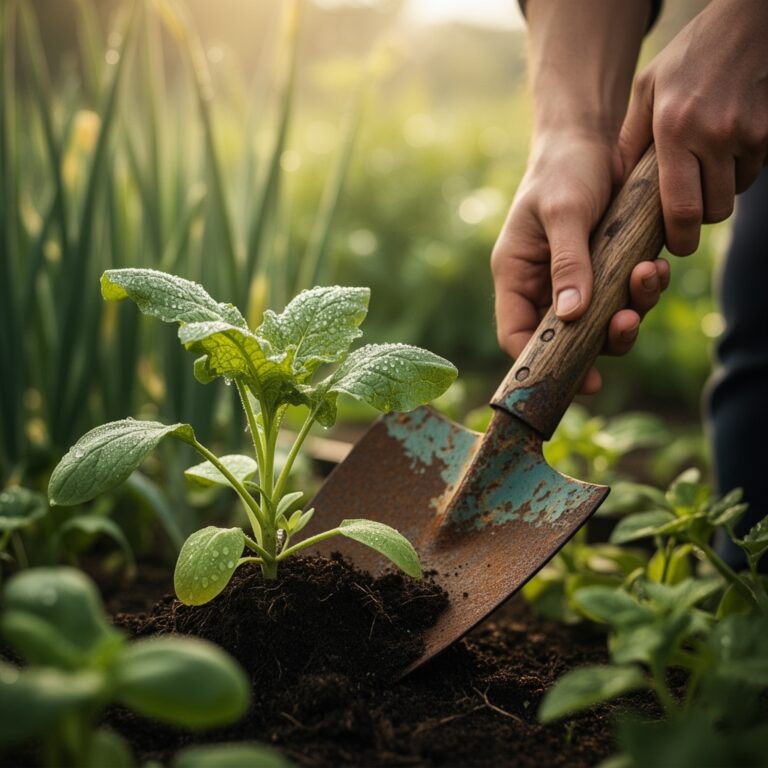
Harden transplants over seven days by reducing water to 60 percent and exposing plants to six hours of direct sun. Dig planting holes twice the root ball width. Amend each hole with one tablespoon bone meal and one teaspoon mycorrhizal inoculant.
Set tomato transplants deep. Bury stems to the first true leaves. Adventitious roots form along buried nodes, increasing water uptake capacity by 40 percent. Orient transplants so the strongest lateral branch faces south to balance auxin distribution.
Water transplants with a starter solution of fish emulsion (5-1-1) diluted to half strength. Apply one cup per plant to saturate the root zone.
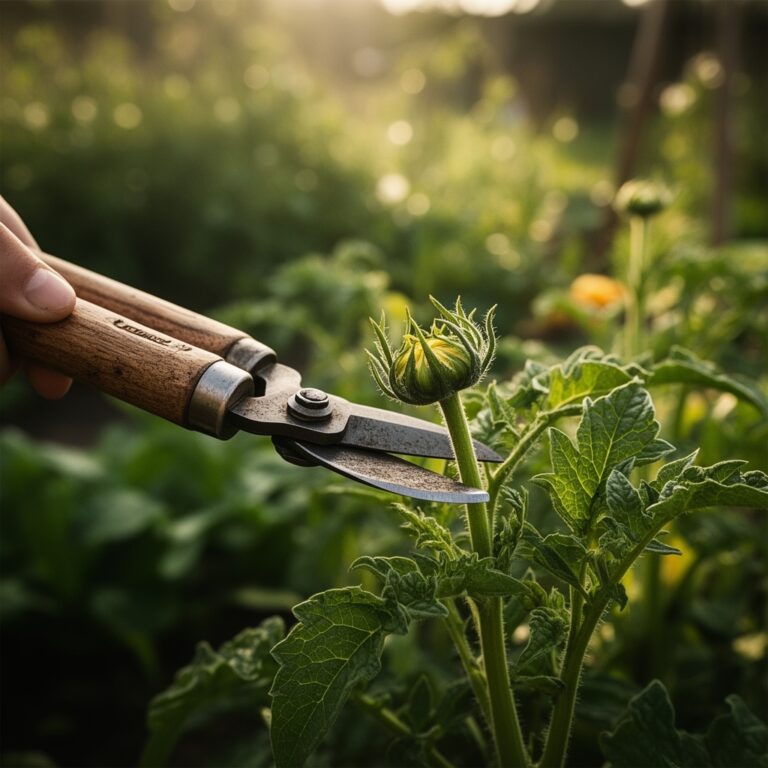
Pro-Tip: Prune tomato transplants at a 45-degree angle to remove lower leaves, leaving four inches of bare stem. This reduces early blight spore contact and improves air circulation.
Establishing
Mulch around transplants after soil warms to 70°F. Early mulching in cool soil delays root expansion. Apply mulch in a donut pattern, leaving two inches clear around stems to prevent crown rot.
Install shade cloth (30 percent density) over young transplants when forecast models predict three consecutive days above 90°F. Remove cloth once true leaf count reaches eight.
Irrigate to 12 inches depth twice weekly. Shallow daily watering encourages surface rooting and heat vulnerability. Monitor soil moisture with a probe at six-inch depth.
Pro-Tip: Apply foliar magnesium sulfate (Epsom salt) at one tablespoon per gallon when first blossoms appear on tomatoes and peppers. This prevents blossom-end rot by saturating calcium transport pathways.
Troubleshooting
Symptom: Wilting at midday despite wet soil.
Solution: Root zone temperature exceeds 85°F. Add two additional inches of mulch. Irrigate at dawn to pre-cool soil.
Symptom: Yellow lower leaves with green veins.
Solution: Iron chlorosis from high pH. Drench roots with chelated iron (Fe-EDDHA) at label rates. Retest pH and apply sulfur if above 7.2.
Symptom: Blossom drop on peppers and tomatoes.
Solution: Night temperatures above 75°F disrupt pollen viability. Mist foliage at 4 p.m. to cool canopy by evaporative action. Provide afternoon shade.
Symptom: Stunted growth with purple leaf undersides.
Solution: Phosphorus deficiency from cold soil. Wait for 65°F soil temperature. Apply liquid bone meal at transplant to bypass slow mineralization.
Symptom: Powdery white coating on squash leaves.
Solution: Powdery mildew from poor air circulation. Space plants to 36-inch centers. Apply potassium bicarbonate spray (one tablespoon per gallon) weekly.
Maintenance
Water delivers 1.5 inches weekly in one or two sessions. Measure output by placing tuna cans in the garden during irrigation. Adjust runtime to fill cans to 0.75 inches per session.
Side-dress heavy feeders every three weeks with compost tea or granular 5-5-5 at one cup per plant. Scatter fertilizer eight inches from stems to match feeder root zones.
Prune indeterminate tomatoes to two leaders. Remove suckers below the first flower cluster. This concentrates auxin flow and increases fruit size by 22 percent.
Scout for pests twice weekly at dawn. Hand-remove hornworms. Apply Bacillus thuringiensis (Bt) when larval count exceeds two per plant.
FAQ
When should I stop watering before harvest?
Reduce irrigation by 50 percent seven days before harvesting tomatoes and melons. Mild water stress concentrates sugars and improves flavor intensity.
Can I plant in the same bed as spring crops?
Yes, if the previous crop was a light feeder like lettuce. Replenish nitrogen with blood meal (12-0-0) at one pound per 100 square feet before transplanting summer crops.
How do I protect plants during a heat wave?
Deploy shade cloth by 10 a.m. on days forecast above 95°F. Increase irrigation frequency to daily, applying 0.5 inches at dawn and dusk.
What mulch works best for summer heat?
Straw reflects 25 percent more solar radiation than wood chips. Apply at four inches depth. Avoid fresh grass clippings, which generate heat as they decompose.
Should I fertilize during extreme heat?
Halt nitrogen applications when temperatures exceed 90°F for five consecutive days. High nitrogen promotes vegetative growth that increases transpiration stress. Resume feeding when temperatures moderate.