7 Pruning Tips to Use a Garden Saw for Thick Stems
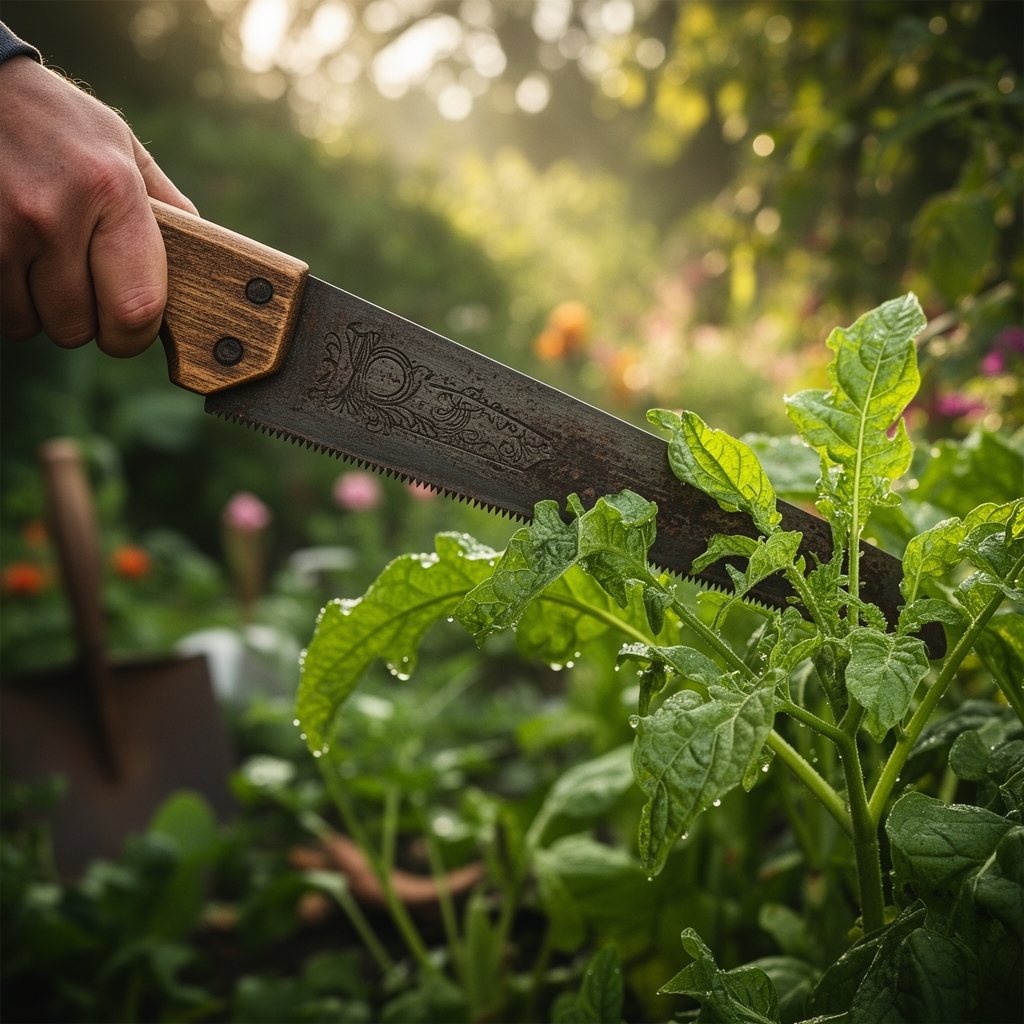
The curved blade of a folding saw bites into the lignified stem of a two-year-old tomato, its teeth pulling sawdust that smells faintly of green wood and late-season sugars. Using a garden saw for vegetable branches becomes necessary when secateurs fail, when the diameter exceeds three-quarters of an inch, and when the plant tissue has hardened beyond the clean compression cut of bypass pruners. Perennial vegetables like artichoke, asparagus crowns past harvest, and indeterminate tomatoes in frost-threatened autumn all present woody growth that demands the mechanical advantage of a toothed blade.
Materials
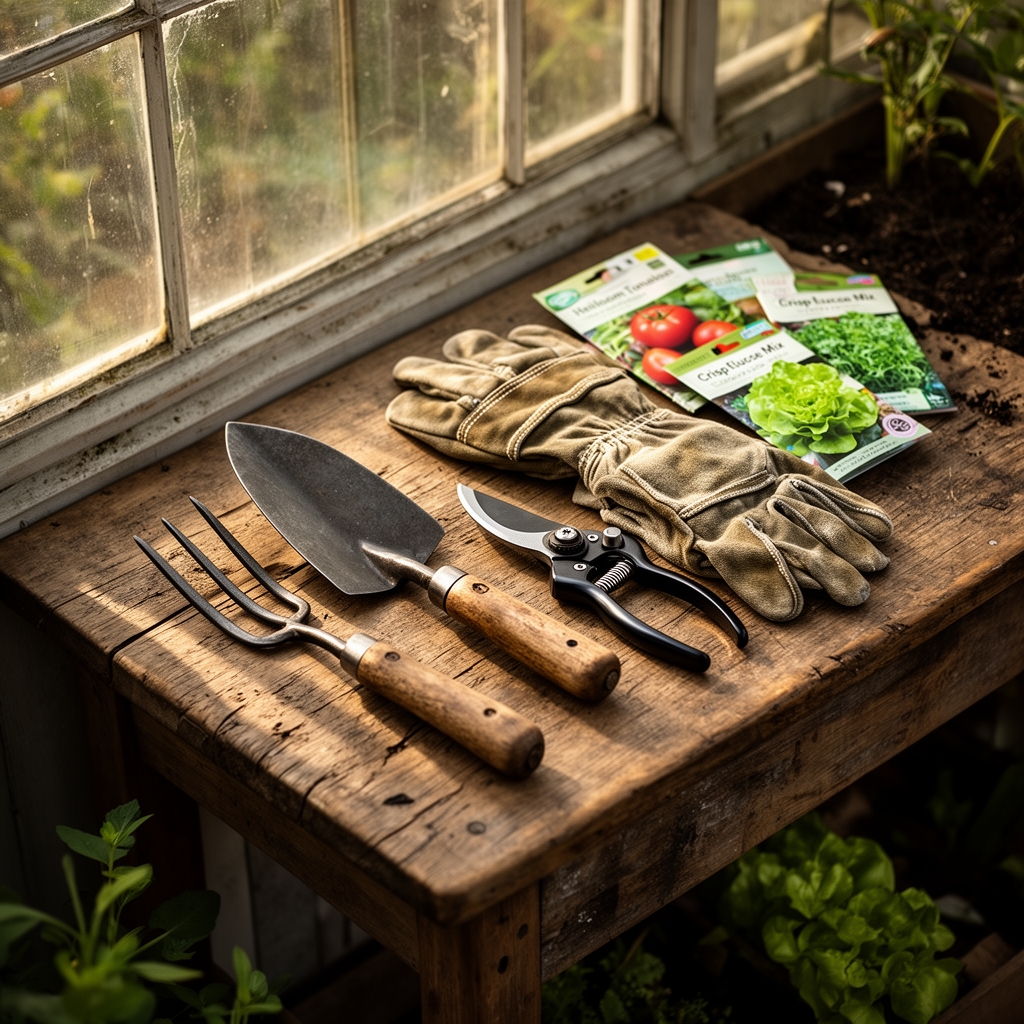
Select a curved pruning saw with 7 to 10 teeth per inch for vegetable work. Straight saws bind in green wood. The curved profile allows a pull-stroke that uses your body weight rather than shoulder strength alone.
Pair the saw with a balanced organic amendment of 4-4-4 NPK ratio, derived from feather meal, bone meal, and kelp. This supports regrowth after severe pruning without forcing excessive vegetative flush. For acid-loving crops like rhubarb, ensure soil pH remains between 6.0 and 6.5 by incorporating sulfur at 1 pound per 100 square feet if your baseline exceeds 7.0.
Calcium availability governs cell wall strength. Apply gypsum (calcium sulfate) at 2 pounds per 100 square feet before the growing season. Cation exchange capacity in clay loams will buffer this release across 90 to 120 days.
Sterilize blades between cuts with 70-percent isopropyl alcohol. Bacterial canker and fungal pathogens colonize fresh wounds within minutes in humid conditions.
Timing
Hardiness Zones 7 through 10 allow autumn pruning of perennial vegetables six weeks before the first frost date. This timing permits wound closure before dormancy. In Zones 4 through 6, delay heavy saw work until late winter, when plants remain dormant and vascular flow has ceased.
For annual vegetables, prune thick stems only when harvesting or removing diseased tissue. Tomatoes pruned after fruit set redirect auxin distribution away from apical dominance, but cutting stems thicker than half an inch risks introducing soilborne pathogens through large wounds.
Spring pruning of asparagus spears transitions to fern removal in late autumn. Wait until foliage yellows completely. The ferns translocate carbohydrates to the crown until senescence is visible.
Phases

Sowing and Early Growth
Woody vegetable stems begin as herbaceous tissue. Brassica stems destined for seed production lignify by week 12. Observe cellulose deposition by pressing your thumbnail into the stem. If it resists indentation, the vascular cambium has laid secondary xylem.
Pro-Tip: Inoculate transplants with Glomus intraradices mycorrhizal fungi at a rate of 1 teaspoon per planting hole. The hyphal network improves phosphorus uptake, which strengthens cell walls and accelerates lignification in stems you will later remove with a saw.
Transplanting and Structural Pruning
Transplant perennials like artichoke at the four-leaf stage. By month six, basal suckers develop woody stems 1 to 1.5 inches in diameter. Remove these with a saw to concentrate energy in the primary crown.
Cut at a 45-degree angle, sloping away from the crown to shed water. Flat cuts collect moisture and invite Botrytis cinerea. Position the saw 1 inch above the crown junction. Cutting flush removes protective bark collars that compartmentalize decay.
Pro-Tip: Seal cuts larger than 1 inch with a thin layer of shellac-based pruning paint only in regions with high disease pressure. Research shows most plants compartmentalize effectively without sealant, but heavy spring rains in humid zones justify intervention.
Establishing and Maintenance Pruning
Established rhubarb crowns produce flower stalks (scapes) with stems up to 2 inches thick. Saw these at ground level as soon as the scape emerges. Flowering drains 30 percent of the crown's stored carbohydrates.
For indeterminate tomatoes, remove lower branches that touch soil by late July. These often exceed secateur capacity. Saw them 2 inches from the main stem to preserve the branch collar.
Pro-Tip: Schedule saw pruning for dry mornings. Stomatal closure by midday reduces sap flow, and cut surfaces dry faster. Pathogen germination requires 4 hours of surface moisture.
Troubleshooting
Symptom: Blackened, sunken tissue around saw cuts.
Solution: Bacterial canker (Clavibacter michiganensis). Remove affected stems 6 inches below visible damage. Disinfect tools after every cut. Apply copper hydroxide at 2 tablespoons per gallon, spraying to runoff.
Symptom: White fungal mycelium on cut surfaces within 48 hours.
Solution: Sclerotinia sclerotiorum. Remove and burn infected material. Improve air circulation by spacing plants 24 inches apart. Avoid overhead irrigation.
Symptom: Wilting above the saw cut despite adequate soil moisture.
Solution: Vascular blockage from incomplete cuts. Saw strokes must penetrate through the pith. Partial cuts crush xylem vessels. Re-cut cleanly below the damaged zone.
Symptom: Excessive sprouting below pruning wounds.
Solution: Auxin redistribution triggering dormant buds. Rub off shoots when they reach 1 inch. Alternatively, apply naphthaleneacetic acid at 10 ppm to suppress adventitious growth.
Maintenance
Water pruned plants with 1 inch of water immediately after cutting to reduce stress. Measure with a rain gauge.
Apply a side-dressing of 5-10-10 fertilizer at 1 cup per 10 feet of row two weeks post-pruning to support wound healing.
Inspect cuts weekly. Remove any tissue that turns brown or soft. Clean cuts develop callus tissue within 10 days.
Sharpen saw blades every 20 hours of use. Dull teeth tear rather than slice, expanding wound surfaces by 40 percent.
FAQ
Can I use a garden saw on green bean plants?
No. Bush and pole beans have herbaceous stems under 0.5 inches in diameter. Use pruning shears to avoid crushing vascular bundles.
What time of day minimizes stress when sawing vegetable branches?
Early morning, between 6 and 9 a.m. Turgor pressure peaks overnight, and cooler temperatures reduce wilting.
Should I remove all thick stems from bolting broccoli?
Yes. Once the main head is harvested and side shoots thin, remove the central stalk at soil level. It competes for nutrients with successive plantings.
How do I prevent sap from gumming up the saw blade?
Spray blades with vegetable oil before cutting resinous stems like sunflower. Wipe with mineral spirits after use.
Is a folding saw safer than a fixed-blade saw for vegetable gardens?
Yes. Folding models reduce accidental cuts when reaching through dense foliage, and the lock mechanism prevents blade collapse during pull strokes.