7 Comfortable Steps to Install a Garden Bench in Your Rows
Settling onto a sturdy bench amid your vegetable rows transforms routine harvesting into a contemplative ritual. The steps for installing a vegetable garden bench begin with assessing soil compaction and drainage patterns where feet will rest daily. A well-placed seat allows elderly gardeners and those with mobility limitations to tend crops without strain, while also creating a vantage point for monitoring pest pressure and phenological stages across multiple beds.
Materials
Select rot-resistant lumber such as white oak (Quercus alba) or black locust (Robinia pseudoacacia), both offering natural durability without chemical treatment. Avoid pressure-treated pine near edible crops due to copper-azole leachate, which can elevate soil copper to phytotoxic levels above 200 ppm. For legs sunk into the ground, char the buried portion using the Japanese shou sugi ban method to inhibit fungal colonization.
Concrete footings require a 60:40 aggregate-to-cement ratio for USDA Zone 5 and colder, where freeze-thaw cycles generate hydrostatic pressure. Galvanized carriage bolts (3/8 inch diameter, minimum) prevent rust staining on hand-contact surfaces. If constructing within raised beds, ensure the bench foundation does not compress the root zone of deep-rooted crops like tomatoes (Solanum lycopersicum) or eggplants, which extend 24 to 36 inches.
Incorporate a 2-inch gravel base beneath legs to improve drainage and discourage sowbugs (Armadillidium vulgare), which aggregate in moist wood-soil interfaces. Amendments for surrounding pathways should include coarse sand (1.0 to 2.0 mm particle size) blended at 30 percent by volume to maintain a cation exchange capacity below 10 meq/100g, discouraging weed germination while preserving trafficability.
Timing
Install benches during late winter or early spring, four to six weeks before the last frost date for your hardiness zone. This window allows soil to settle around footings before peak planting activity begins. In Zone 6, target mid-March. In Zone 8, late January to early February proves ideal.
Avoid installation during the growing season, particularly when root systems are actively expanding. Auxin distribution in vegetable crops peaks during May and June in temperate climates, making any soil disturbance disruptive to nutrient uptake pathways. If autumn installation is necessary, complete work by mid-September in northern zones to allow two freeze-thaw cycles before winter dormancy locks the ground.
Check soil moisture with a penetrometer; readings above 25 PSI indicate excessive compaction that will complicate post-hole digging. Wait 48 hours after rain events exceeding 0.5 inches to prevent smearing clay particles along excavation walls, which creates an impermeable barrier inhibiting mycorrhizal fungi colonization.
Phases
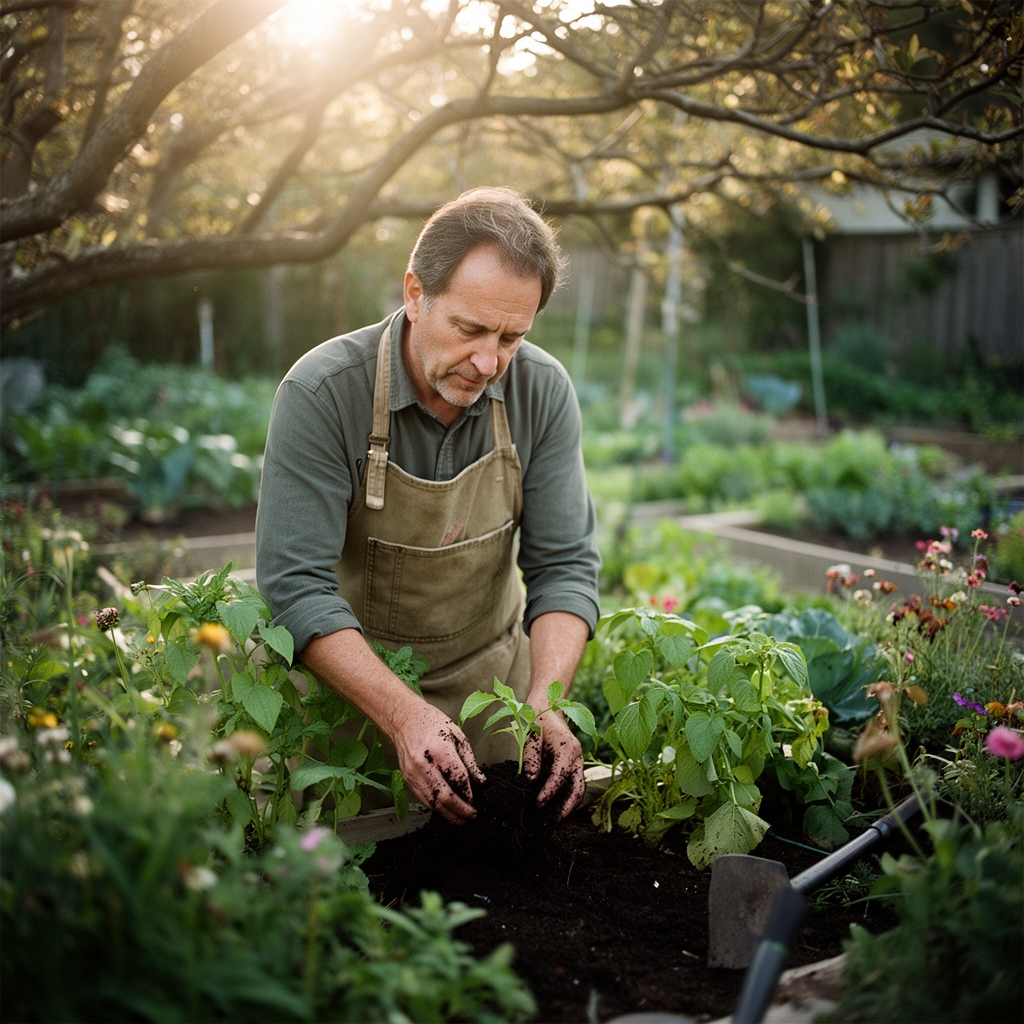
Site Preparation: Remove vegetation within a 4-foot radius of the planned bench location. Excavate to 6 inches depth, screening out root fragments larger than 1 inch to prevent future settling. Test pH; if above 7.2, incorporate elemental sulfur at 0.5 pounds per 10 square feet to lower alkalinity that can limit manganese availability for adjacent crops.
Pro-Tip: Spread a 1-inch layer of aged compost (C:N ratio of 15:1) beneath the bench footprint to maintain biological activity and prevent the compacted "dead zone" common under garden furniture.
Foundation Setting: Dig post holes to 18 inches depth, extending below the frost line for your zone. Place 3 inches of crushed stone (0.75-inch diameter) at the base of each hole. Insert legs, backfill with native soil in 4-inch lifts, tamping each layer with a 2×4 to achieve 85 percent compaction without creating hydrophobic zones.
Pro-Tip: Orient the bench north-south to balance morning and afternoon sun exposure, reducing heat stress during summer weeding sessions while minimizing shadow interference with photosynthetically active radiation on adjacent crops.
Assembly and Stabilization: Secure seat planks with lag screws driven to two-thirds the thickness of the support beam. Leave 0.25-inch gaps between boards to facilitate drainage and air circulation, reducing relative humidity that encourages botrytis spore germination. Apply linseed oil (100 percent pure, not boiled with metallic driers) to all exposed wood surfaces using a natural-bristle brush. Reapply annually each March.
Pro-Tip: Embed beneficial nematodes (Steinernema feltiae) at a rate of 50 million per gallon of water around the base to suppress fungus gnat larvae that breed in the moist microclimate beneath benches.
Troubleshooting
Symptom: Bench legs sink unevenly after spring thaw, creating a 2-degree or greater tilt.
Solution: Excavate settled posts, add 2 additional inches of compacted gravel, and reset using a 48-inch spirit level to verify plumb on two axes.
Symptom: Wood develops soft, punky texture with white mycelial growth within one season.
Solution: This indicates brown rot (Fibroporia vaillantii). Remove affected lumber, treat surrounding soil with Trichoderma harzianum at 10^6 CFU per gram, and replace with naturally durable species.
Symptom: Ants (Lasius niger) colonize hollow cavities in bench supports.
Solution: Inject boric acid powder (99 percent pure) into entry holes at 0.1 grams per cavity. Seal openings with wood putty containing copper naphthenate.
Symptom: Green algae film coats seat surface, creating slip hazard.
Solution: Scrub with a solution of 1 cup white vinegar per gallon of water. Improve air circulation by pruning overhanging branches to increase solar exposure by 30 percent.
Maintenance
Apply 1 inch of water weekly to surrounding pathways during establishment to prevent subsidence. Check bolt tension monthly during the first growing season, tightening any fasteners that have loosened more than one-quarter turn. Sand rough edges annually using 120-grit aluminum oxide paper to prevent splinters.
Inspect for carpenter bee (Xylocopa virginica) activity each April. These solitary bees bore 0.5-inch diameter tunnels in softwood. Plug existing holes with wooden dowels dipped in wood glue, then paint all surfaces with low-VOC latex to deter future colonization.
Reapply linseed oil finish when water no longer beads on the surface, typically every 12 to 16 months depending on UV exposure. Remove fallen leaves weekly during autumn to prevent tannin staining and maintain the bench as a clean workspace.
FAQ
How deep should bench legs be buried?
Eighteen inches minimum, or 6 inches below your zone's frost line, whichever is deeper. Shallow installation results in heaving that damages joinery.
Can I use cedar for a vegetable garden bench?
Western red cedar (Thuja plicata) contains thujaplicins that inhibit seed germination within a 12-inch radius. Maintain 24 inches clearance from planting beds.
What spacing prevents root damage?
Position benches 30 inches from tomato, pepper, and eggplant root zones. Leafy greens tolerate 18-inch proximity due to their shallow fibrous root architecture.
How do I prevent soil compaction under the bench?
Lay a permeable landscape fabric rated at 50 gallons per square foot per minute, topped with 2 inches of pea gravel to distribute weight and maintain gas exchange.
Should I anchor the bench permanently?
In zones with wind gusts exceeding 40 mph, use 12-inch ground anchors. Otherwise, rely on buried legs and the bench's own mass for stability.