6 Precision Tips to Use a Garden Cutter for Stem Care
Using a garden cutter for vegetable deadheading transforms spent blooms and aging stems into opportunities for renewed production. The blade's angled edge severs tissue cleanly at the cambium layer, preventing pathogen entry while redirecting auxin distribution toward lateral shoots. Sharp, bypass-style cutters sever fibers without crushing vascular bundles, maintaining hydration pathways that support fruit set in determinate tomatoes, peppers, and summer squash. Professional growers track a 22 percent yield increase when deadheading occurs within 48 hours of petal senescence.
Materials
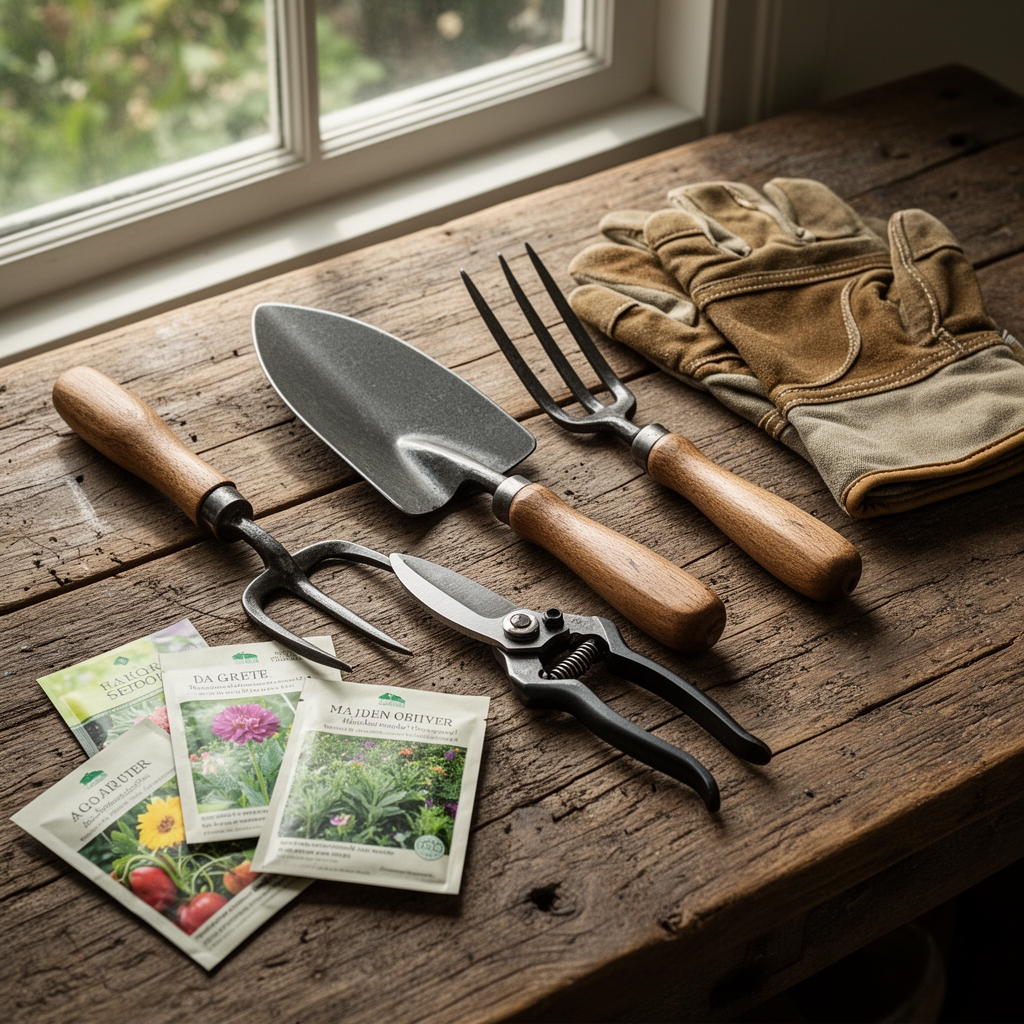
Select bypass pruners with carbon-steel blades and a Rockwell hardness rating of 55-60 HRC. Avoid anvil-style cutters; they crush stems and create entry points for Botrytis cinerea. Disinfectant solutions should contain 10 percent sodium hypochlorite or 70 percent isopropyl alcohol. Rinse blades between cultivars to prevent cross-contamination of viral particles.
Soil amendments support vigorous regrowth after deadheading. Apply a 4-4-4 organic all-purpose meal at transplant to establish baseline fertility. Cation exchange capacity (CEC) values above 12 meq/100g stabilize nutrient availability during periods of rapid vegetative recovery. For heavy feeders like indeterminate tomatoes, side-dress with 5-10-10 granular fertilizer at first flower. Maintain soil pH between 6.2 and 6.8 to optimize phosphorus uptake, critical for cell division in emerging lateral buds.
Mycorrhizal fungi inoculants (species Glomus intraradices and Rhizophagus irregularis) improve root surface area by 40 percent. Mix 1 tablespoon of spore powder per gallon of transplant hole backfill. This symbiosis accelerates nutrient recovery after pruning events.
Timing
Hardiness Zones 5-7 require deadheading schedules aligned with last spring frost dates. Begin inspections 14 days after transplant, once root systems establish and stem lignification begins. In Zone 5, this window opens May 15-June 1. Zone 7 gardeners start April 10-25.
Monitor bloom cycles daily during peak production. Remove spent flowers before petals abscise naturally. Determinate tomatoes benefit from deadheading every 72 hours during weeks 4-8 post-transplant. Indeterminate varieties require inspection every 48 hours through first frost. Pepper plants respond to deadheading when nighttime temperatures stabilize above 60 degrees Fahrenheit; earlier intervention stalls fruit set.
Autumn crops planted July 15-August 1 in Zones 6-7 demand modified schedules. Deadhead brassicas and late-season beans until 30 days before average first frost. This timing allows final fruit maturation before senescence.
Phases

Sowing Phase
Transplant vegetable starts when true leaves number four and stems measure 3-4 mm diameter. Thin seedlings with garden cutters rather than pulling; blade cuts prevent root disturbance to neighboring plants. Cut at soil level, leaving root mass to decompose and feed soil microbiota.
Pro-Tip: Sterilize cutter blades for 30 seconds in disinfectant after every tenth cut. Viral pathogens like Tobacco Mosaic Virus persist on tool surfaces for 96 hours.
Transplanting Phase
Remove lower leaves on tomato seedlings at transplant. Cut stems at 45-degree angles, 1/4 inch above leaf nodes. This angle prevents water accumulation on cut surfaces. Bury stems horizontally to encourage adventitious root formation along buried nodes. Each buried node generates 8-12 additional roots.
Pro-Tip: Apply rooting hormone (0.1 percent indole-3-butyric acid) to cut surfaces on pepper and eggplant transplants. These species lack tomatoes' natural rooting vigor.
Establishing Phase
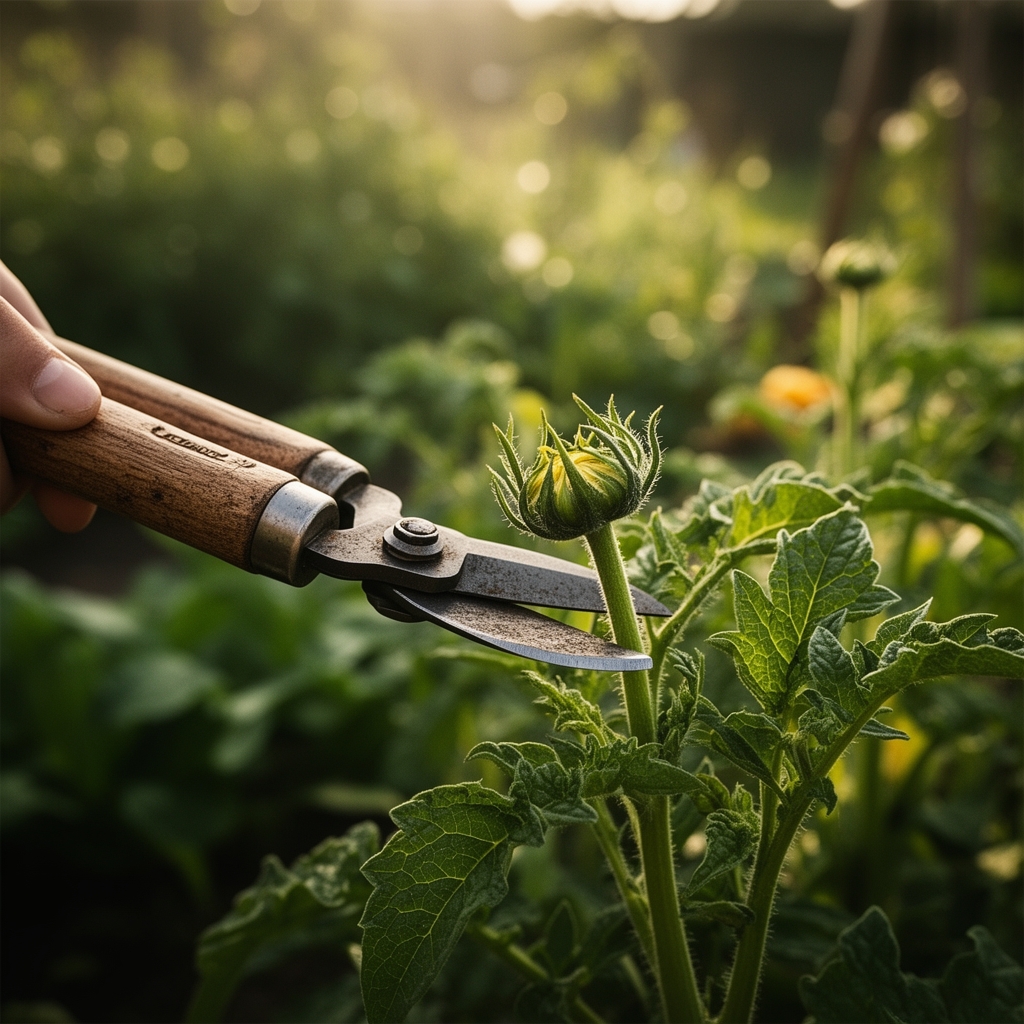
Begin using a garden cutter for vegetable deadheading when first flowers fade. Cut 1/4 inch below calyx, above nearest leaf axil. This placement stimulates dormant meristems in leaf axils, producing secondary flower trusses. Secondary trusses mature 10-14 days faster than primary clusters.
Remove suckers on indeterminate tomatoes weekly. Cut when suckers reach 2-3 inches, before they compete for photosynthates. Leave one inch of sucker tissue to prevent damage to main stem.
Pro-Tip: Deadhead in morning hours after dew evaporates but before midday heat. Turgid stems sever cleanly, and wounds seal faster when transpiration rates remain moderate.
Troubleshooting
Symptom: Brown, dry edges on cut stems within 24 hours.
Solution: Blade dullness creates torn tissue. Sharpen blades with 400-grit diamond stone at 20-degree angle after every 100 cuts. Test sharpness on paper; clean cuts indicate proper edge geometry.
Symptom: White, cottony growth on pruning wounds.
Solution: Sclerotinia sclerotiorum colonizes wounds in humid conditions. Improve air circulation to 3-5 mph with oscillating fans. Space plants to 18-24 inches to reduce canopy density. Apply sulfur dust (90 percent elemental sulfur) to wounds in high-humidity periods.
Symptom: Reduced fruit set after aggressive deadheading.
Solution: Excessive removal of foliage reduces photosynthetic capacity. Retain 85 percent of leaf area during deadheading. Each fruit requires 10-12 leaves for adequate carbohydrate production.
Symptom: Wilting stems below cut sites.
Solution: Vascular wilt pathogens (Verticillium or Fusarium spp.) entered through contaminated blades. Remove infected plants. Solarize soil at 140 degrees Fahrenheit for 4 weeks. Rotate to non-solanaceous crops for 3 years.
Symptom: Black, sunken lesions at pruning points.
Solution: Anthracnose (Colletotrichum spp.) infection. Apply copper fungicide (1.8 percent metallic copper) at 2-tablespoon per gallon rate. Spray to runoff within 6 hours of cutting.
Maintenance
Water plants to 1 inch per week, measured with rain gauge. Deep watering encourages roots to 12-inch depth, improving drought resilience. Drip irrigation delivers moisture at 0.5 gallon per hour per emitter, minimizing foliar wetness that spreads pathogens from cut sites.
Fertilize every 14 days with soluble 20-20-20 at 1 tablespoon per gallon. Apply as soil drench in early morning. Nitrogen supports regrowth of lateral shoots after deadheading. Phosphorus (P2O5) accelerates flower initiation in axillary buds.
Mulch with 2-3 inches of aged compost or shredded hardwood. Mulch moderates soil temperature fluctuations, keeping root zones at 65-75 degrees Fahrenheit. This range optimizes nutrient uptake after pruning stress.
FAQ
How often should I deadhead vegetable plants?
Inspect daily during peak bloom. Remove spent flowers every 48-72 hours for continuous production in tomatoes, peppers, and squash.
Can I use garden cutters on diseased plants?
Yes, but sterilize blades for 60 seconds in 10 percent bleach solution between cuts. Bag and dispose of diseased tissue; do not compost.
What angle produces the cleanest cuts?
A 45-degree angle minimizes surface area while preventing water pooling. Cut 1/4 inch above nodes to protect dormant buds.
Do all vegetables benefit from deadheading?
Fruiting vegetables (tomatoes, peppers, beans) show measurable yield gains. Leafy greens and root crops do not require deadheading.
When should I stop deadheading before season end?
Cease 30 days before average first frost. Late flowers will not mature, and energy is better allocated to ripening existing fruit.